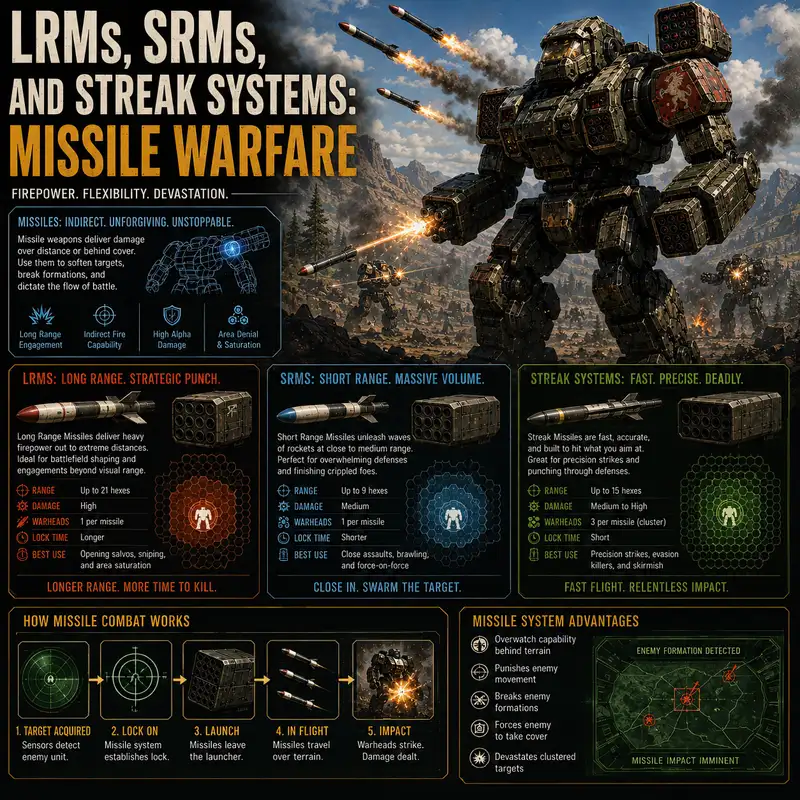
LRMs, SRMs, and Streak Systems: Missile Warfare
Missiles give BattleTech commanders a flexible way to deliver fire across very different ranges and tactical situations. Long-range missiles can shape a battlefield from behind cover, especially when spotters provide targeting information, while short-range missiles concentrate multiple warheads against enemies already inside close combat. This episode examines how missile salvos work, why not every missile in a successful attack necessarily strikes, and how ammunition consumption becomes increasingly important during extended operations. Streak technology changes that relationship by refusing to launch without an adequate firing solution, conserving both ammunition and the heat that would have been generated by a wasted salvo. The episode also considers Artemis fire control, Narc beacons, specialized ammunition, electronic interference, maintenance requirements, and the logistical cost of carrying reloads. Missile warfare is powerful precisely because it offers multiple ways to influence an enemy, but every launcher depends on sensors, guidance, ammunition, and the supply organization behind the BattleMech. Visit ImaginedBattlefield.com for more military and science fiction.