Outbound Light: The Discovery That Triggered the Invasion
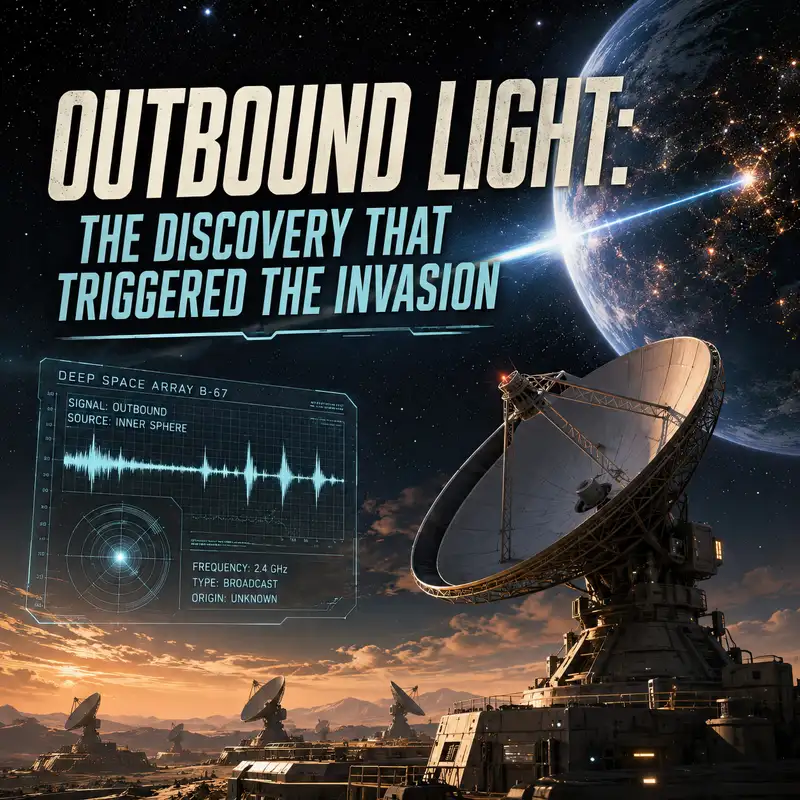
On September twenty-seventh, in the year thirty forty-eight, the Merchant-class JumpShip Outbound Light emerged into a star system its crew believed was uncharted. The jump was routine. What waited beyond it was not. Sensors found organized traffic and military forces the expedition could neither identify nor outrun. The crew had spent more than two years looking for evidence of Aleksandr Kerensky’s lost Star League Defense Force. They had succeeded, at the precise moment some of Kerensky’s descendants were searching for a reason to invade the Inner Sphere.
The Outbound Light is often described as the discovery that triggered the Clan invasion, and that description is accurate as long as the word triggered is understood correctly. The ship did not create Clan hostility, invent the Crusader cause, or transform a peaceful society into an aggressive one. The Clans had argued over a return to the Inner Sphere for generations. The Outbound Light provided something more useful than a new idea. It provided current intelligence, physical proof that the Inner Sphere could reach Clan space, and a political opportunity that Khan Leo Showers of Clan Smoke Jaguar knew how to exploit.
The expedition belonged to ComStar’s Explorer Corps, an organization founded in the year twenty-nine fifty-nine. Publicly, the corps charted the Deep Periphery, contacted isolated colonies, and recovered knowledge from abandoned settlements. Privately, it also searched for lost Star League installations, advanced technology, and the fate of Kerensky’s Exodus fleet. ComStar’s motives were never entirely scientific. Its power rested partly on control of interstellar communications and on its reputation as guardian of technologies the Successor States had lost. A surviving Star League society might be a historic discovery, a competitor, a threat, or an arsenal waiting for another power to find.
The Outbound Light departed Bone-Norman in June of thirty forty-six on a standard three-year survey. The expedition centered on the Merchant-class JumpShip itself and carried two DropShips, the Union-class Knox and the Buccaneer-class Golden Hind. Precentor Vincent Dupont commanded the vessels, while ROM Precentor Arabella Bradford led the mission. Across the JumpShip and its attached craft were forty-six crew members, accompanied by a seven-person survey team. This was neither an invasion force nor a heavily armed reconnaissance group. It was a small exploratory formation designed to investigate distant systems and return with information.
Explorer Corps doctrine gave such missions considerable freedom. The Outbound Light did not file a fixed route before departure. That allowed its commanders to change course when old charts, anomalous readings, or faint transmissions suggested a better direction. In exploration, flexibility can separate discovery from a long tour of empty systems. In recovery operations, it is less charming. Once the Outbound Light vanished, ComStar had no reliable trail to follow. The same independence that allowed the expedition to reach Huntress also ensured that no rescue force could quickly find it, and no warning could be drawn from its silence.
For more than two years, the voyage appears to have been largely uneventful. Then the expedition detected a faint, decades-old transmission associated with something called the Shadow Crusade. The signal suggested distance and age, but justified changing course. That decision was entirely consistent with the mission. Explorers are sent to follow evidence, particularly when it may point toward an inhabited world or Star League remnant. The crew could not know that the signal was drawing them toward the capital of Clan Smoke Jaguar, one of the most militant societies descended from Kerensky’s exiles.
A JumpShip arriving in an unknown system accepts a period of vulnerability. The Kearny-Fuchida drive that makes interstellar travel possible normally requires days to recharge before another jump. During that interval, the vessel depends on its position, escorts, and the judgment of local authorities. The Outbound Light had reached the system successfully, but success placed it inside a security problem it could not solve. It could not reverse course and disappear. Its DropShips could maneuver, and its crew could gather information, but the expedition’s strategic mobility had become temporarily unavailable at the moment it was needed most.
Huntress was not an isolated colony waiting to be rediscovered. It was the capital world of Clan Smoke Jaguar and a guarded military system. The Comitatus-class vessel High Guard was assigned to system security, and its OmniFighters moved against the intruders before the expedition could escape. The encounter was unequal. The Explorer Corps vessels were lightly protected, while the Smoke Jaguars possessed advanced aerospace technology, trained warriors, and complete local control. No meaningful battle could be won. The Outbound Light, the Knox, and the Golden Hind were impounded, and their crews were taken into custody.
That capture reveals an important truth about reconnaissance. Information is not merely something a scout gathers. A scout also carries it. The Outbound Light’s databanks contained charts, reports, political assessments, technological records, and knowledge of a society the Clans had not observed clearly for decades. Its personnel knew still more. They understood ComStar, the Great Houses, recent wars, and the direction of Inner Sphere politics. Once the Smoke Jaguars controlled the ships and the people aboard them, the expedition ceased to be an observer. It became an intelligence archive delivered directly to an adversary.
The Smoke Jaguars interrogated the captives for several days and used chemical methods, including drugs intended to weaken resistance and compel disclosure. Accounts distinguish between Bradford and Dupont. Bradford resisted enough to attract some respect from her captors. Dupont eventually revealed crucial information about ComStar and conditions in the Inner Sphere. That difference should not become an easy judgment about courage. Captivity, isolation, coercive drugs, and systematic interrogation are designed to break people. The strategic failure occurred before any prisoner reached the limit of endurance. The expedition had entered hostile space with no practical means of denying its information to the enemy.
The fate of most of the expedition remains uncertain. Early ComStar accounts claimed the ships and crews were returned after their memories and navigational records were erased. Later information did not support that version. Only the seven-person survey team was returned, and its members showed severe psychological damage from their captivity. The remaining personnel, the Outbound Light, and its two DropShips disappeared from the reliable record. Even after Inner Sphere forces reached Huntress, they recovered no clear answer. The incident changed interstellar history, while most of the people who actually made the discovery vanished into a historical footnote.
What Leo Showers obtained from the Outbound Light was not a perfect picture of the Inner Sphere. Intelligence rarely arrives in that form. He received a mixture of facts, institutional assumptions, incomplete forecasts, and ComStar’s own biases. Yet it was far better than the Clans’ previous information. It described a Human Sphere recovering from centuries of destructive war. It showed new political combinations, renewed military production, and the return of technologies once thought lost. It also described states still divided, suspicious, and unaware the Clans existed.
To understand why those records became an invasion order, the long Clan argument matters. The Clans were descendants of the Star League Defense Force that left the Inner Sphere under Aleksandr Kerensky. After turmoil among the exiles, Nicholas Kerensky created a social order built around warrior castes, ritualized conflict, and selective history. The Inner Sphere became both origin and political symbol. It was remembered as the civilization that had betrayed the Star League, driven out the faithful, and then squandered its inheritance through dynastic war.
Two broad political philosophies emerged from that history. Wardens believed the Clans should protect the Inner Sphere from external danger and guide it only when truly necessary. Crusaders believed the Inner Sphere had fallen into corruption and must be conquered, disciplined, and reunited under Clan rule. These were not academic positions. They affected prestige, alliances, military planning, and the purpose of the warrior caste itself. A return offered glory, resources, and a mission worthy of generations of preparation. Remaining meant more Trials against rivals over limited territory and inherited grievances.
The Grand Council had considered invasion before. Crusader proposals gained strength as stories of the Succession Wars reached Clan space, but the Wardens repeatedly delayed a decision. The Clans created intelligence efforts, including Intelser agents who gathered uncertain reports through the Periphery. The Dragoon Compromise sent Wolf’s Dragoons into the Inner Sphere disguised as mercenaries. Their early reports were valuable, but communication stopped. By the time the Outbound Light appeared, the Clans had gone roughly three decades without a dependable update from the Dragoons.
That intelligence vacuum mattered. Political groups need not be completely ignorant to become dangerous. They need only enough uncertainty for preferred interpretations to flourish. Crusaders could argue that the Inner Sphere remained weak and ripe for conquest. Wardens could argue that intervention was unnecessary or premature. Neither side had current evidence strong enough to settle the issue. News of the Fourth Succession War and the War of thirty thirty-nine reached the Homeworlds only in fragments. Every report became ammunition in an argument older than most living warriors’ careers.
The Outbound Light arrived with evidence of major change. The Federated Suns and Lyran Commonwealth had joined through the Steiner-Davion alliance to create the Federated Commonwealth. That superstate possessed immense territory, industry, and military potential. The Helm Memory Core had accelerated the return of Star League knowledge. Armies were fielding improved equipment, factories were restoring capabilities, and rulers were thinking beyond the exhausted patterns of the late Third Succession War. None of this made an attack on the Homeworlds imminent. It did make a powerful presentation possible.
Leo Showers was already an ardent Crusader and the Khan of a Clan that valued aggression, martial dominance, and uncompromising action. He did not need captured information to choose his policy. He needed it to persuade others that his preferred policy was necessary. By controlling the prisoners and records, he controlled the first interpretation. He could decide which facts appeared urgent, which qualifications disappeared, and which possibilities were presented as intentions. The first report often shapes every report that follows. Showers ensured there would be no competing first report.
His case emphasized the rise of the Federated Commonwealth and the recovery of advanced technology. He portrayed the Inner Sphere as moving toward reunification under the Steiner-Davion alliance, perhaps recreating the Star League without the Clans. Then the argument took its decisive step. A reunited Inner Sphere, armed with restored technology and aware that Kerensky’s descendants still existed, might eventually follow the same route as the Outbound Light and attack the Homeworlds. The expedition’s accidental arrival became evidence of hostile capability. Possibility became intent, and intent became urgency. It was a familiar transformation when a desired operation has waited for approval.
The weakness in Showers’s analysis was not that every fact was false. The Inner Sphere was recovering. The Federated Commonwealth was formidable. Lost technologies were returning. Exploration beyond the Periphery was occurring. The weakness was the chain connecting those facts to an imminent invasion of Clan space. The Successor States remained divided by history, borders, dynastic interests, and bloodshed. They did not know where the Clan Homeworlds were. Most did not know the Clans existed. A small ComStar expedition had followed an uncertain trail, not arrived as the advance scout of a grand coalition.
The argument succeeded because it spoke to more than fear. It promised Crusaders their historic mission, offered ambitious Clans glory, and warned that delay might let rivals shape the future. Clan politics rewarded visible resolve. No Khan wanted to appear indifferent to a threat against the Homeworlds, particularly when a foreign vessel had physically arrived above a Clan capital. The Outbound Light was therefore both evidence and theater. Its captured hull proved that the distance between the societies was no longer absolute, even though its accidental route could not easily be repeated.
On November twenty-first, in the year thirty forty-eight, the Grand Council voted to authorize the invasion. Only Clan Wolf opposed the decision. Even Clan Coyote, long associated with the Warden position, was persuaded by Showers’s presentation and the pressure surrounding it. The vote approved more than a campaign. It settled, for the moment, the purpose of the Clans. Generations of ritual combat would now be directed outward. The descendants of the Exodus would return not as refugees, diplomats, or guardians, but as conquerors convinced that military superiority granted both the right and the obligation to rule.
Clan Wolf challenged the ruling through a Trial of Refusal, translating political dissent into armed combat according to Clan law. The Wolves fought against forces representing the decision and inflicted serious losses, but they could not overturn the result. The transition was revealing. The quality of Showers’s intelligence argument was no longer the central issue. Once the Council voted, the dispute moved into a system where battle validated policy. Clan Wolf’s defeat did not prove that the Inner Sphere threatened the Homeworlds. It proved the Wolves could not defeat the forces defending the decision under the Trial’s terms.
In December, Leo Showers was selected as ilKhan, reviving an office vacant for roughly a century. Planning for Operation Revival followed. Four main Clans would advance through separate invasion corridors, with another in reserve, and the ultimate competition increasingly centered on the road to Terra. The campaign was shaped through bidding and Trials that rewarded Clans for promising to accomplish objectives with fewer forces. That system encouraged economy and confidence. It also encouraged commanders to underestimate logistics, occupation, and an enemy outside Clan ritual.
The invasion force that emerged from these decisions possessed extraordinary battlefield advantages. Clan warriors were highly trained. Their OmniMechs, aerospace fighters, weapons, and battle armor surpassed Inner Sphere equivalents. Their WarShips gave them capabilities largely absent from Successor State service. Yet the political argument that launched the campaign also distorted its planning. If the Inner Sphere was decadent and inferior, a limited force could race toward Terra through controlled victories. Spare parts, garrisons, civil administration, and cooperation with conquered populations seemed less urgent than speed, honor, and prestige. The enemy was studied as a target, not as a society capable of adapting.
Operation Revival began in the near Periphery in thirty forty-nine and struck the Inner Sphere proper in March of thirty fifty. Early victories appeared to justify its assumptions. Worlds fell rapidly. Defenders faced unfamiliar machines, superior range, and warriors who issued formal challenges before overwhelming them. The invasion soon met problems the records had not resolved and Showers had not emphasized. Inner Sphere commanders learned. Populations resisted. Supply lines lengthened. Rival Clans competed with one another. Tactical superiority remained real, but conquest required more than winning isolated engagements.
This is why the Outbound Light should not be treated as the sole cause of the invasion. Without it, the Crusader movement would still have existed, and pressure for war would probably have continued to grow. Another report, expedition, or crisis might have produced the same decision. The discovery mattered because it changed timing and removed hesitation. It placed fresh intelligence in the hands of the faction most prepared to weaponize it. History turns on such moments because they align forces already present behind action.
ComStar’s role adds another layer of irony. The Explorer Corps had been created partly to identify dangers beyond the Periphery and protect ComStar’s position. The Outbound Light did identify the greatest external military danger the Inner Sphere had faced in centuries. It failed to report the discovery. Instead, its mission data helped convince that danger to move. ComStar’s flexible routing policy made exploration more effective but left no usable path for recovery. The organization controlling the Human Sphere’s communications received no warning until the consequences were advancing toward inhabited worlds.
The incident was therefore an intelligence disaster for nearly everyone involved. The expedition discovered the Clans but could not transmit the finding. ComStar lost the ship and could not reconstruct its route. The Grand Council received authentic information through a selective political presentation. The Clans learned enough to invade but not enough to understand the societies they intended to conquer. The Inner Sphere remained unaware that an invasion decision had been made. Each institution held part of the truth. None assembled it into an accurate common picture, and the organization that acted first was the one most willing to treat uncertainty as confirmation.
It is also important not to let the scale of the later invasion erase the people aboard the expedition. The Outbound Light carried technicians, pilots, survey personnel, security staff, and specialists whose mission was to examine distant systems. They did not choose the Grand Council’s politics, the Crusader cause, or ComStar’s secrecy. Their capture turned their knowledge into a weapon, and their disappearance left families and colleagues with little more than an absence. Grand strategy calls such personnel sources, assets, or losses. Those terms are administratively useful and morally incomplete.
The discovery that triggered the invasion was therefore not a mysterious signal of destiny or an unavoidable collision between two civilizations. It was a chain of human decisions. ComStar sent a secretive expedition along an unrecorded route. The expedition followed evidence into a guarded system. Clan Smoke Jaguar captured the ships and coerced their crews. Leo Showers selected the facts that served his cause. The Grand Council accepted possibility as imminent threat, then let combat settle the remaining objection. The Outbound Light opened the door, but politics pushed the Clans through it.
Its final significance rests in that distinction between cause and trigger. The invasion came from generations of ideology, ambition, fear, and competition. The Outbound Light gave those forces a date, a captured archive, and a persuasive image: an Inner Sphere vessel hanging helplessly above Huntress. To the explorers, it was the end of a search. To Leo Showers, it was proof that waiting had become dangerous. To the Human Sphere, it became the moment an unanswered question about Kerensky’s descendants was converted into a war.